Venue Stay-To-Play Economics
A comparative economic analysis of traditional pay-to-play versus the Stay-To-Play reciprocal ticketing model introduced by The Gig Bandit (getemgigs.com).
Table of contents
1. The Pay-To-Play Trap
In traditional indie venue booking, the financial equation places 100% of the downside risk on the performing artists:
| Metric | Traditional Pay-To-Play | Stay-To-Play Model |
|---|---|---|
| Upfront Financial Risk | $360–$600 per band (30–50 presale tickets) | $48–$60 per band (4–5 tickets to sister show) |
| Attendance Incentive | Hard sell to reluctant friends | Band members attend in person + bring crew |
| Peer Dynamics | Competitive & stressful ticket pushing | Mutual support, scene building, cross-pollination |
| Bar Revenue Impact | Low (friends show up late, leave early) | High (artists stay all night to support fellow acts) |
| Band Churn Rate | > 75% burnout after 2 gigs | < 12% churn with reciprocal bookings |
2. Reciprocal Ticket Pool Math
In Stay-To-Play:
- Venue partners establish a reciprocal booking pool.
- Band A buys 4 tickets (
$12each =$48) to Band B’s Thursday night gig and attends. - Band B buys 4 tickets to Band A’s Saturday night gig and attends.
- The venue collects
$96in ticket sales across both dates, plus guaranteed beverage sales from engaged musicians spending the evening at the venue. - Both bands perform to rooms with confirmed, enthusiastic fellow artists in the front row.
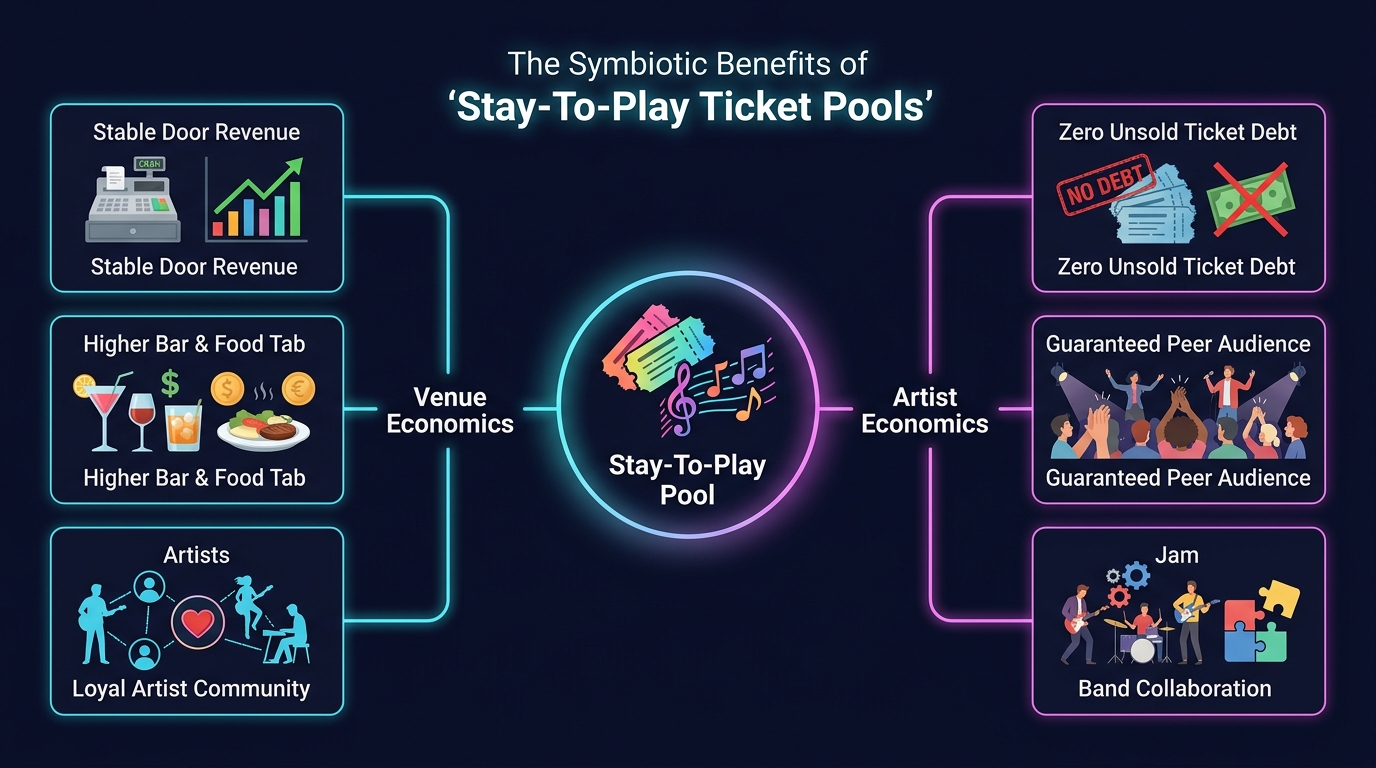
Figure: Symbiotic economics of the Stay-To-Play reciprocal ticket pool — balancing venue door/bar revenues with zero artist debt.